
PCOS is one of the conditions I talk about most, both here at Nevada Fertility Institute and on social media, because the amount of misinformation surrounding it is genuinely staggering. I’ve had patients come in convinced they can never get pregnant, convinced they caused this condition themselves, or convinced that losing weight will just make it go away. None of those things are true, and when you’re navigating something as emotionally loaded as fertility, misinformation isn’t just frustrating. It can delay care, deepen shame, and close doors that are very much still open.
So let’s set the record straight. Here are the PCOS myths I encounter most often, and what the evidence actually says.
First, What Is PCOS?
Polycystic ovary syndrome is a hormonal disorder that affects approximately 1 in 10 women of reproductive age, making it one of the most common endocrine conditions in the world. It’s characterized by hormonal imbalances that can disrupt ovulation and produce a wide range of symptoms including irregular or absent periods, acne, unwanted hair growth, hair thinning, weight gain, and insulin resistance.
To be officially diagnosed with PCOS, you need to meet two out of the following three criteria (known as the Rotterdam criteria):
- Irregular or absent periods
- Elevated androgen (male hormone) levels
- Polycystic-appearing ovaries on ultrasound
Notice that you don’t need all three. PCOS presents differently in different people, which is part of why it so often goes undiagnosed or misdiagnosed. On average, women see three different physicians before they receive a PCOS diagnosis. That statistic alone tells me we need to do better, starting with education.
Myth 1: PCOS means you have cysts on your ovaries.
This is probably the most widespread misconception about the condition, and honestly, I understand why. The name is confusing.
The “cysts” referred to in polycystic ovary syndrome are not actually cysts in the traditional sense. They’re small, fluid-filled follicles where immature eggs have become trapped rather than developing and releasing normally. And here’s the thing: plenty of people with PCOS don’t even have these follicles visible on ultrasound. You can absolutely have a confirmed PCOS diagnosis without polycystic-appearing ovaries, as long as you meet the other diagnostic criteria.
The name has caused a lot of unnecessary fear and confusion, and there’s actually been a push in recent years to rename the condition “reproductive metabolic syndrome” to better reflect what it really is.
Myth 2: If you have irregular periods, you must have PCOS.
Irregular cycles are one feature of PCOS, but they’re not exclusive to it. Many conditions can disrupt your cycle, including thyroid disorders, elevated prolactin levels, low body weight, significant stress, uterine fibroids, and pelvic inflammatory disease, among others.
What I tell my patients is this: irregular periods are never something to brush off. If your cycle is consistently shorter than 22 days or longer than 34 days, or if you’re going months without a period, that’s worth investigating. The cause may or may not be PCOS, but it’s always worth getting a proper evaluation so you know what you’re dealing with.
Myth 3: PCOS only affects people who are overweight.
This one frustrates me because it’s harmful in two directions. It leads some people to assume they can’t have PCOS because they’re not overweight, which delays their diagnosis. And it leads others with PCOS to feel that their weight is somehow the cause of their condition, which is not accurate.
The reality is that while many people with PCOS do carry extra weight (partly because the hormonal environment makes weight loss harder), roughly 20% of those with PCOS have a body mass index in the normal range. This is sometimes called “lean PCOS,” and it can actually be harder to identify and diagnose.
PCOS does not discriminate by body type. Thin people get it. Athletes get it. People who eat well and exercise regularly get it. Your weight does not determine whether you have this condition.
Myth 4: PCOS is your fault.
I want to be as direct as possible here: you did not cause your PCOS.
PCOS is a complex condition with genetic and environmental components. Research has shown that if a close family member has PCOS, your own risk is meaningfully elevated. The condition runs in families, and while lifestyle factors can influence how symptoms present and how severe they are, they are not the root cause.
I see patients carry a tremendous amount of guilt about their PCOS, as if they somehow brought it on themselves through their diet, their habits, or their choices. That guilt is undeserved, and it gets in the way of the compassionate, practical care that actually helps people. You are not to blame for having this condition.
Myth 5: Losing weight will cure PCOS.
This is often the very first thing people with PCOS are told: just lose some weight. And while I’m not dismissing the role that weight management can play in symptom relief, I want to be clear that weight loss is not a cure.
PCOS is a lifelong condition. It can be managed extremely well, but it cannot be reversed by losing weight, by following a specific diet, or by taking a supplement you read about online. Anyone telling you otherwise is not giving you accurate information.
That said, the relationship between PCOS and body weight is real and worth taking seriously. Modest weight loss in people who are carrying excess weight can meaningfully improve insulin sensitivity, regulate cycles, and improve fertility outcomes. What I caution against is extreme dieting or unsustainable exercise programs, which can raise cortisol levels and actually make things worse. Slow, consistent, sustainable changes are always the goal.
For some patients, I also discuss GLP-1 medications, which have shown real promise for people managing both PCOS and insulin resistance.
Myth 6: If you have PCOS, you won’t be able to get pregnant.
This is the myth I’m most passionate about correcting, because it causes so much unnecessary heartbreak.
PCOS is one of the leading causes of ovulatory dysfunction, which can make conception more challenging. But it absolutely does not make pregnancy impossible. In fact, PCOS-related infertility is among the most treatable forms of fertility challenges we see.
Many of my patients with PCOS conceive naturally, especially with lifestyle support and close monitoring. For those who need a little more help, they typically respond beautifully to relatively simple interventions like ovulation induction with oral medications and IUI. For those who need to go further, IVF is highly effective for people with PCOS.
Having PCOS does not mean your path to parenthood is closed. It may look different than you expected, but there are real, evidence-based options at every stage of the journey.
Myth 7: PCOS is just a fertility issue.
PCOS matters whether or not you ever want to get pregnant. The hormonal imbalances associated with the condition have real, long-term implications for your overall health, including elevated risk of type 2 diabetes, cardiovascular disease, high blood pressure, and endometrial cancer (related to the buildup of the uterine lining that occurs when ovulation is irregular).
People with PCOS also have higher rates of anxiety and depression. I take that seriously in how I care for my patients. Managing PCOS well means looking at the whole person, not just their reproductive goals.
Myth 8: Birth control pills are the only treatment for PCOS.
Hormonal birth control is one tool for managing certain PCOS symptoms, particularly for people who aren’t currently trying to conceive. It can help regulate cycles, manage acne and unwanted hair growth, and protect against endometrial buildup. But it is far from the only option, and it doesn’t treat the underlying condition.
Depending on what’s driving your symptoms, your care plan at Nevada Fertility Institute might include insulin-sensitizing medications like metformin, targeted lifestyle modifications, hormone management, ovulation induction if you’re trying to conceive, or other interventions tailored to where you are in your life and what your body actually needs.
There’s no one-size-fits-all approach to PCOS, and I’d be wary of anyone who treats it like there is.
You Deserve Accurate Information
PCOS is complex, common, and very manageable with the right support. What it is not is a life sentence, a fertility death sentence, or something you caused. The misinformation that surrounds it does real harm, and I’m committed to countering it every chance I get.
If you’ve been diagnosed with PCOS and have questions, or if you suspect you might have it and haven’t been evaluated, I’d love to talk with you. You can start from anywhere in the country with a telehealth consultation, and we’ll figure out together what the right next steps look like for you.
Book a consultation with Nevada Fertility Institute, wherever you are.
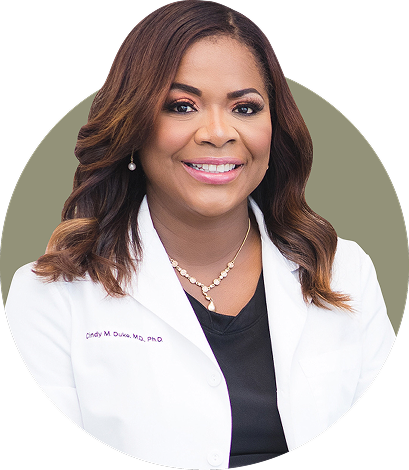
Dr. Cindy M. Duke, MD, PhD, FACOG is the Founder and Chief Medical Officer of Nevada Fertility Institute in Las Vegas, Nevada. She is board certified in Obstetrics and Gynecology and fellowship-trained in Reproductive Endocrinology and Infertility, with additional doctoral training in Microbiology and Immunology.